
ETHICAL TAKEUPSC GS4 Ethics Case Studies
Case Studies from Everyday News
Essential Reading for UPSC GS-IV Mains
Free PDFs · 3–5 new studies every week

Privilege, impunity and accountability
How can public institutions ensure equal accountability while protecting fair process?
Free UPSC ethics case study PDFs
Explore each issue through the values, choices and responsibilities at its heart.
Group by GS4 area, value, dilemma or thinker
 Illustration
AUTHORITY & WORKPLACE DIGNITY
Abuse of Authority
Source article: 17 October 2026 | Published: 18 October 2026
Examine lawful supervision, professional courage and fair inquiry when public authority is allegedly used against junior officers.
 Illustration
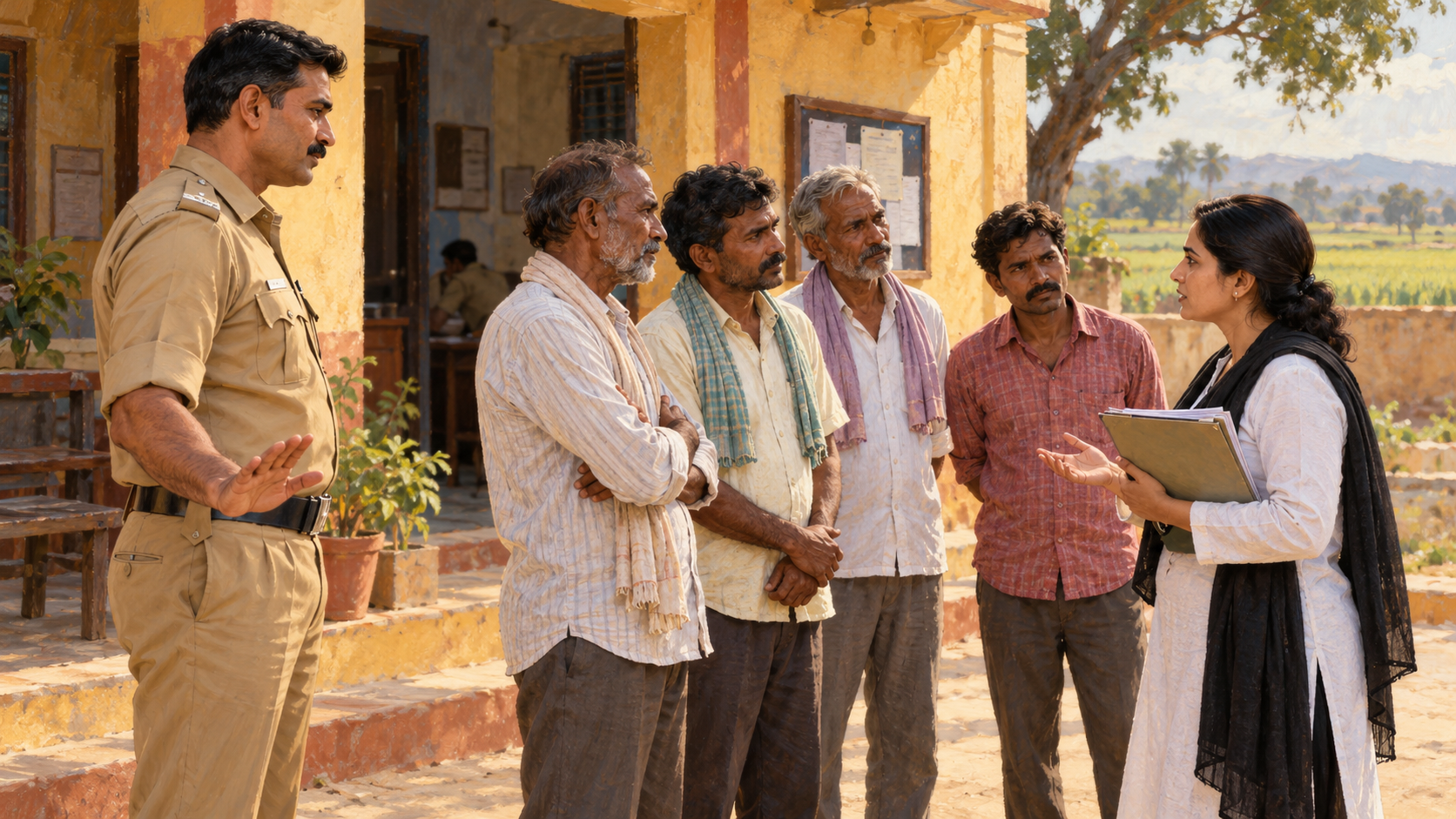
DIGNITY & POLICE ACCOUNTABILITY
Custodial Violence
Source article: 17 October 2026 | Published: 18 October 2026
Connect custodial responsibility with lawful restraint, evidence preservation, independent scrutiny and fair process.
IllustrationACCOUNTABILITY & RULE OF LAW
Privilege, impunity and accountability
Source article: 12 October 2026 | Reviewed: 13 October 2026
Examine responsibility, fair investigation and road safety through an evidence-led police decision case.
 Illustration
PUBLIC SERVICE & CITIZEN DIGNITY
Tahsildar suspension and citizen dignity
Source article: 12 October 2026 | Reviewed: 13 October 2026
Explore respectful administration, safe grievance reporting and fair accountability through a fictional revenue-officer case.
 Illustration
CHILD RIGHTS & MEDIA ETHICS
Child Rights and Media: identity and dignity
Reviewed: 11 October 2026 | 10 October consultation remarks
Examine identity protection, rehabilitation and responsible reporting through a fictional newsroom decision case.
 Illustration
CIVIL LIBERTIES & PUBLIC ADMINISTRATION
Air India and police: security access and civil liberties
Reviewed: 11 October 2026 | 10–11 October 2026 episode
Examine lawful police cooperation, aircraft access and passenger rights through a fictional airline security director’s decision case.
 Illustration
INSTITUTIONAL POWER & PROFESSIONAL ETHICS
BCI and NALSAR: dissent and fair process
Reviewed: 11 October 2026 | August 2026 episode
Examine regulatory responsibility, lawful dissent and individual fairness through a fictional vice-chancellor’s decision case.
 Illustration
EXAMINATION INTEGRITY & PUBLIC TRUST
NEET paper leak and examination integrity
Reviewed: 10 October 2026 | NEET-UG 2026
Explore confidential access, personal loyalty and fair opportunity through a fictional examination expert’s decision case.
 Illustration
CUSTODIAL ETHICS & PUBLIC SERVICE
Jailer behind bars and custodial responsibility
Source article: 8 October 2026
Examine custodial power, private gain and safe reporting through five ethical lenses and a fictional warder’s decision case.
 Illustration
JUDICIAL ETHICS
Courage on the bench
Source issue: September 2026 · Reviewed 9 October 2026
How can judges resist intimidation while protecting family and witnesses, preserving impartiality and respecting fair sentencing? Explore courage supported by accountable institutions.
 Illustration
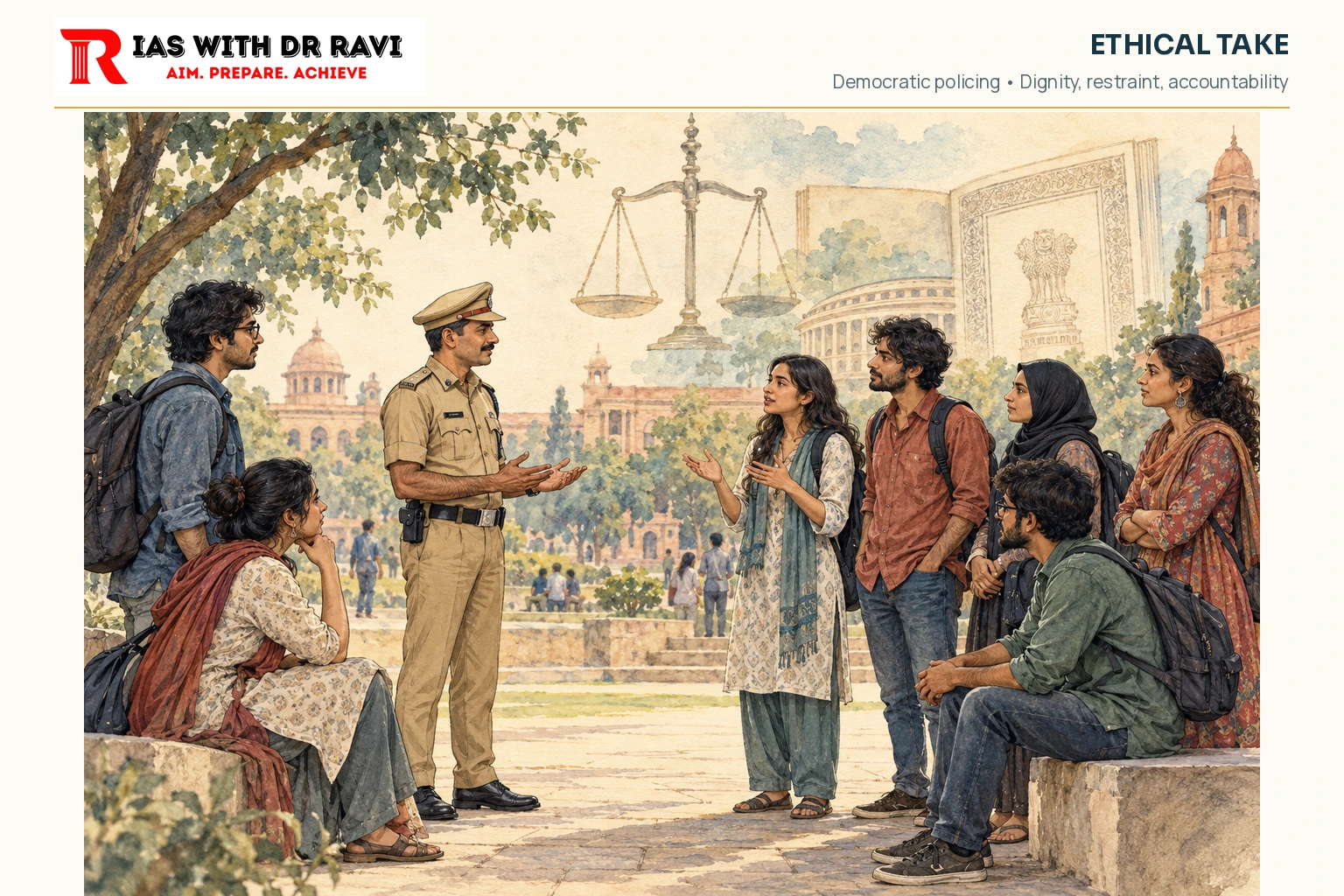
DEMOCRATIC POLICING & PUBLIC SERVICE
Police brutality, detachment and democratic policing
Source reports: 5 September 2026
Examine public-order policing through duty, virtue and fairness, then work through a fictional officer's decision and four complete practice answers.
 Illustration
EDUCATION & CIVIC VALUES
Patriotism by coercion and school authority
Source report: 17 August 2026
Examine patriotic participation, school discipline and child dignity through primary-text thinkers, careful legal context and a fictional education-officer decision case.
 Illustration
HEALTH & ETHICS
Grief, parenthood and IVF age limits
Court order: 2 September 2026
Examine reproductive autonomy, clinical responsibility and lawful discretion through an anonymised Gujarat judgment and a fictional ART governance case.
 Illustration
PROFESSIONAL ETHICS
Restorative justice and professional accountability
Court order: 1 September 2026
When can a creative corrective response protect institutional dignity while offering a genuine chance to reform? Explore the difference between apology, public benefit and meaningful accountability.
 Illustration
LOCAL GOVERNANCE
Burial rights and religious exclusion
Source issue: 7 October 2026
Explore the tension between local self-government and equal treatment through burial access, community dialogue and a fictional SDM decision case.
 Illustration
MEDIA ETHICS
Media ethics and the courage to apologise
Compiled 13 September 2026
A newspaper’s apology for a paid advertisement offers a case in content vetting, survivor dignity and institutional accountability. Explore the ethical reasoning, a fictional deadline-pressure case and practical steps for correction.
 Illustration
PUBLIC SERVICE
Dignity in death
Source reports: August 2026
Examine how an official can secure respectful public service for a grieving family while investigating failures fairly and building dependable arrangements.
No studies match this search. Try another topic or choose All studies.
Choosing the best ethics material for UPSC preparation
Useful GS4 material should help you explain a value, recognise a dilemma and justify a practical decision. Look for clear sources, balanced treatment of stakeholders and reasoning you can apply to a new situation. Use Ethical Take alongside your syllabus-based study of Ethics, Integrity and Aptitude.
Current-affairs examples for ethics answers
Use the news context to understand the issue, then build a short example around the value it illustrates. Examination integrity connects to fairness and public trust; custodial responsibility to dignity and accountability; media corrections to professional responsibility. Distinguish reported allegations from established findings, and keep the original source and date with your notes.
UPSC ethics case studies with model-answer reasoning
Attempt the adapted decision case before opening the reasoning. Identify stakeholders, compare options, explain your choice and add safeguards for implementation. Treat the model response as a worked approach to evaluate, rather than a script to memorise. The study reader includes practice questions to help you apply the ideas again.
GS4 value addition and visual revision
The seventeen studies currently published each include six illustrated section diagrams. Use these alongside the analysis to revise ethical concepts, stakeholder relationships and decision steps. In your own answers, use a diagram only when it makes the reasoning clearer; explain the choice in words too.
Free ethics notes and case-study PDFs
Every study card links directly to its free illustrated PDF. These are news-based case-study resources for UPSC Mains, with ethical analysis and practice, rather than a complete GS4 textbook. Choose a topic in the library, read the study online, then download its PDF for revision.
Browse the free case-study library · Follow the answer-writing routine
Ethical dilemmas, frameworks
and model-answer reasoning
Work through the context, weigh competing values and turn your reasoning into a balanced response.
The downloadable study remains the centre of the programme: a complete resource to read, annotate and practise with.
The issue and its context
Understand what happened and why it matters.
Values and dilemmas
Identify the principles and tensions at stake.
Ethical frameworks
Apply duty, justice, care and virtue.
People and governance
Map stakeholders and administrative responsibilities.
Thinkers and perspectives
Connect ethical ideas to the case.
An adapted case study
Step into the decision-maker’s position.
Model-answer reasoning
See how choices become a defensible answer.
Practice questions
Test your judgment in a fresh context.
Read. Reflect. Practise.
A simple routine for building depth, one ethical question at a time.
Read the issue
Start with the context. Note the stakeholders, the constraints and the values that need protection.
Make your judgment
Pause before the model answer. Compare your options and decide what you would do, and why.
Write and improve
Attempt the case and practice questions. Use the model reasoning to sharpen your own response.
Bring more depth to your next answer.
Free studies. Real-world questions. Thoughtful preparation.